Dans le monde rapide du sport professionnel, la performance est la chose la plus importante, mais le style n'est pas loin derrière. Aujourd'hui, si vous entrez dans un terrain de football, de basket-ball ou de hockey, vous verrez bien plus que les vieilles chaussures de sport. blanc lignes. Le ruban sportif coloré est devenu un signe d'assistance physique exceptionnelle et d'image de marque personnelle. Par exemple, les bandes ruban de hockey violet sur un bâton et les bandes de kinésiologie vertes ou bordeaux sur le mollet d'un coureur.
Mais ces couleurs ont-elles plus qu'un simple aspect esthétique ? Cet article examine les différents types de rubans sportifs colorés, les raisons psychologiques et fonctionnelles qui sous-tendent le choix des couleurs et, surtout, la manière de les utiliser correctement pour obtenir les meilleurs résultats.
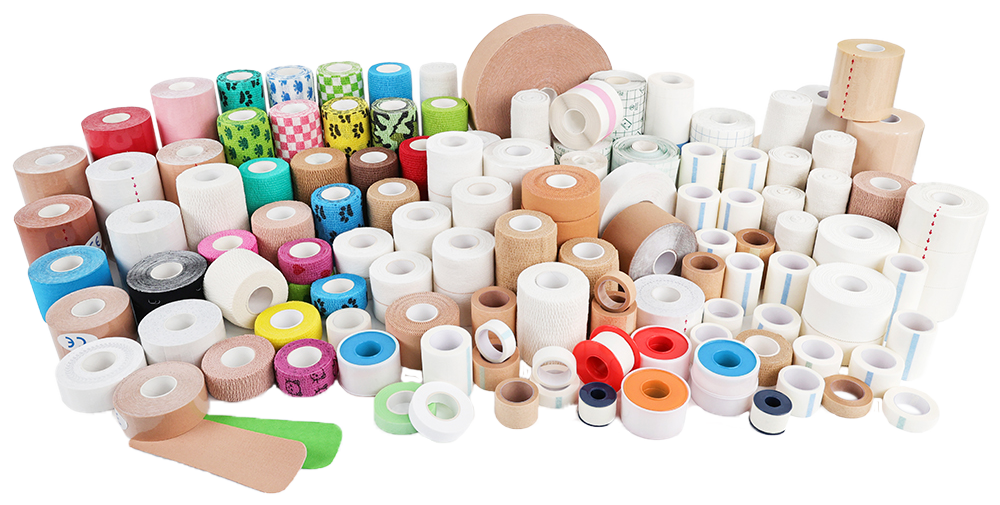
Pourquoi les athlètes choisissent-ils des rubans adhésifs colorés pour le sport ?
Pendant longtemps, les bandes athlétiques n'existaient qu'en blanc, en beige ou en tan (ce qui est communément appelé “couleur chair”). Elles étaient conçues pour être discrètes et se confondre avec la peau ou les chaussettes. Mais la culture sportive d'aujourd'hui a accueilli un “arc-en-ciel” d'options.
1. Identité de l'équipe et travail en commun
La raison la plus pratique de l'essor du ruban adhésif sportif coloré est qu'il permet aux équipes de se ressembler. Les joueurs utilisent souvent du ruban bleu, rouge, orange ou jaune pour assortir les couleurs de leurs maillots. Les règles de la FIFA pour des sports comme le football stipulent souvent que tout ruban adhésif visible sur le terrain de jeu est interdit. chaussettes de football doit correspondre à la couleur du kit. C'est pourquoi beaucoup de gens veulent certaines couleurs, comme le gris, le marron et même le bordeaux.
2. Causes sociales et sensibilisation
La couleur est un moyen puissant de parler aux gens. Tous les mois d'octobre, bande de sport rose est indispensable dans les stades pour le mois de la sensibilisation au cancer du sein. Les athlètes peuvent également choisir le violet ou le vert pour manifester leur soutien à certaines campagnes de sensibilisation à la santé ou pour rendre hommage à quelqu'un.
3. L'avantage mental
L'équipement joue un rôle psychologique. Le fait d'enfiler une bande jaune ou orange vif peut donner à un athlète un “regain de confiance”, lui permettant de se sentir plus prêt et plus “blindé” pour la compétition. Certains athlètes, en revanche, préfèrent le noir ou le bleu foncé pour donner une image plus sournoise et agressive.
La montée du ruban adhésif violet pour le hockey : Ce qui est à la mode en ce moment
Le ruban adhésif violet pour le hockey est l'une des modes les plus populaires dans le domaine du sport actuellement. Certains traditionalistes pourraient s'en tenir au noir ou au blanc, mais les nouveaux joueurs utilisent le violet pour deux raisons principales :
Visibilité sur la glace : Le violet se détache sur la glace blanche et le palet noir, ce qui permet aux joueurs de savoir où se trouve leur lame dans leur vision périphérique.
Personnalisation : Les joueurs peuvent personnaliser leur “brindille” (crosse de hockey), ce qui permet de la repérer facilement dans les vestiaires ou sur le banc de touche.
Le ruban de hockey violet de haute qualité doit être résistant à l'humidité et durable, qu'il soit utilisé pour entourer une lame afin de sentir la rondelle ou comme poignée. C'est le genre de choses que les entreprises professionnelles comme Aupcon veillent à inclure dans leurs processus de fabrication.
Comment utiliser les rubans adhésifs colorés pour le sport de la bonne façon
Si vous n'utilisez pas le ruban de manière appropriée, il pourrait irriter votre peau ou, pire encore, vous donner l'impression d'être en sécurité alors que vous ne l'êtes pas, ce qui pourrait entraîner des dommages. Pour une application professionnelle, suivez ces étapes importantes :
Étape 1 : Préparer la surface
Les huiles, la sueur et les lotions n'adhèrent pas à la colle. Utilisez de l'eau et du savon ou passez rapidement un coup d'alcool à friction pour nettoyer la zone. Si les poils sont épais, les couper à 2-3 mm les rendra beaucoup plus faciles à enlever et moins désagréables.
Étape 2 : Couper et mesurer
Lorsque vous utilisez du ruban kinésiologique (le type extensible), mesurez la longueur du muscle lorsqu'il est plié ou en fonctionnement. Conseil : Utilisez des ciseaux pour arrondir les coins de votre ruban à chaque fois. Les premiers éléments qui restent collés aux vêtements et qui se détachent sont les bords pointus.
Étape 3 : Mise en place des “ancres” (0% Tension)
Les deux premiers pouces et les deux derniers pouces d'une bande de ruban adhésif sont ce qui la maintient en place. Vous devez les utiliser sans les étirer. Si vous tirez sur les extrémités, le ruban tendra la peau et provoquera des ampoules ou une desquamation prématurée.
Étape 4 : Mise en place de la tension “active
Pour la partie médiane, utilisez un étirement léger à modéré (typiquement 25% à 50% pour la partie médiane). bande de kinésiologie). Si vous utilisez des ruban d'oxyde de zinc (comme un rouleau blanc ou beige pour la stabilité de la cheville), l'objectif est de soutenir, donc de s'assurer que l'écharpe est bien serrée, mais pas au point d'interrompre la circulation.
Étape 5 : Allumer le feu
La plupart des bandes sportives colorées modernes utilisent une colle acrylique qui agit lorsqu'elle est chauffée. Après avoir appliqué la bande sur votre peau, frottez-la fortement avec vos mains pendant 30 secondes. La chaleur du contact crée un lien qui dure longtemps.
Aupcon : Votre partenaire commercial pour les rubans sportifs colorés
Aupcon est un sommet fabricant de bandes sportives colorées, et ils savent que les athlètes et les équipes ont besoin de plus que des solutions uniques. Aupcon est un acteur important dans le commerce de gros et de bandes sportives personnalisées. L'entreprise existe depuis plus de 10 ans et dispose d'une usine de 13 000 mètres carrés.
Pourquoi devriez-vous faire appel à Aupcon pour vos besoins en gros ?
Notre usine peut fabriquer n'importe quelle couleur pour s'adapter à votre marque ou au kit de votre équipe, du blanc normal et des tons chair au vert lime vif, au rose, au bordeaux et à l'orange.
Personnalisation pour les entreprises : Nous proposons des services OEM/ODM, ce qui vous permet d'imprimer le logo de votre entreprise sur le tissu de la bande, l'intérieur du tube en papier ou l'emballage destiné à la vente.
Des normes de haute qualité : Nos rubans sportifs colorés sont certifiés par la FDA et l'ISO. Vous pouvez donc être sûr que les rouleaux rouges, bleus et bronzés que vous obtenez sont sans danger pour votre peau et ne contiennent pas de latex ou d'allergènes.
Prix direct de l'usine : Aupcon élimine les intermédiaires, ce qui lui permet d'offrir des prix bas sur les commandes en gros. Cela en fait le meilleur partenaire pour les cliniques sportives, les ligues professionnelles et les distributeurs au détail.
Dernières réflexions
Le ruban adhésif coloré pour le sport n'est plus seulement une nouveauté ; c'est un outil utile qui combine un soutien de qualité médicale avec la possibilité de s'exprimer visuellement. Les éléments les plus importants pour réussir sont la qualité et la technique, qu'il s'agisse d'envelopper une cheville dans du beige pour la cacher ou d'utiliser du ruban adhésif de hockey violet sur la glace.