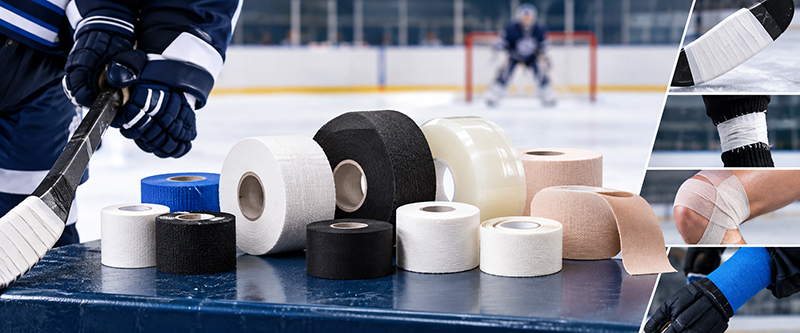
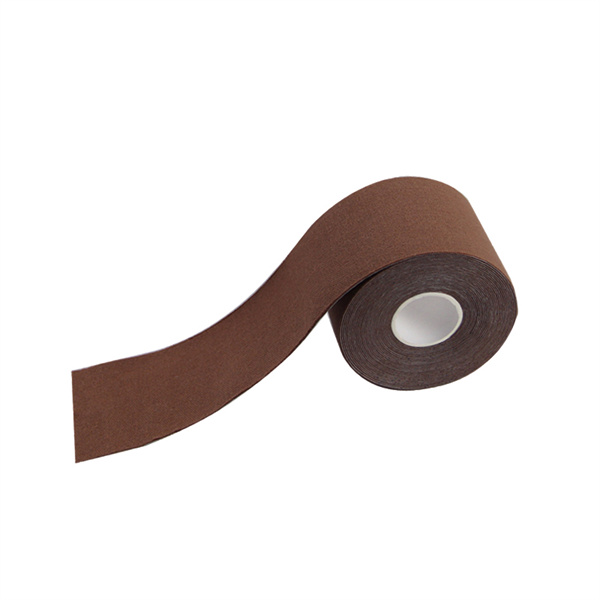
It’s not the most glamorous product in the world. But if you’re an athlete, brown sports tape can be a literal godsend. We’re not talking about latex or scotch tape for your scrapes and bruises. This is more like cinta de kinesiología for injuries like calambres en las piernas, esguinces de tobillo, or to help relieve pain from muscle strains. Read on to find out how tape works and what effect it has on your body!
What is brown sports tape?
La cinta es un material adhesivo sensible a la presión que se utiliza para unir objetos. Consiste en un respaldo que está recubierto con un adhesivo. El respaldo generalmente está hecho de papel, tela o película plástica. La cinta está disponible en muchos anchos y largos diferentes.
La cinta fue inventada por primera vez en 1845 por el cirujano Horace Day. Descubrió que cuando aplicaba presión a una herida, ayudaba a cerrar la herida y prevenir la infección. Hoy en día, la cinta se usa para muchos propósitos, como sujetar vendajes, sellar cajas y sobres y pegar carteles en las paredes.
La ciencia detrás de la cinta es bastante simple. Cuando aplica presión a la cinta, el adhesivo se adhiere a la superficie que toca. Cuanta más presión aplique, más fuerte será el vínculo.
The history of brown sports tape
La cinta se ha utilizado durante siglos para unir y sujetar lesiones. Se cree que los antiguos egipcios usaban tiras de papiro para mantener los huesos rotos en su lugar, mientras que los antiguos griegos y romanos usaban bandas de lino o cuero.
La primera cinta adhesiva fue desarrollada en 1845 por el Dr. Horace Day, un cirujano que buscaba una manera de asegurar los apósitos quirúrgicos de forma más segura. Recubrió un lado de una tira de tela con goma arábiga, que es un adhesivo natural derivado de la savia de los árboles. Esta primera versión de la cinta adhesiva se llamaba “yeso medicado del día” y se vendió comercialmente durante muchos años.
En 1851, otro médico, Benjamin Franklin Goodrich, inventó un proceso para vulcanizar el caucho, que lo hizo más resistente y elástico. Goodrich se dio cuenta de que este nuevo caucho podía usarse para hacer una cinta adhesiva mejorada y patentó su propia versión en 1857. Esta cinta se conoció como "yeso de óxido de zinc" y fue ampliamente utilizada por médicos y atletas durante muchos años.
En 1928, el químico de 3M Company, Richard Drew, creó una cinta de celofán con un adhesivo acrílico que se podía quitar fácilmente de las superficies sin dañarlas. Esta “Cinta Scotch” se convirtió en un éxito instantáneo entre los consumidores y sigue siendo uno de los tipos de cinta más populares en la actualidad.
En la década de 1930, 3M también desarrolló una película plástica de vinilo y adhesivos sensibles a la presión que podían aplicarse a ambos lados de la película. Esto resultó en
How does brown sports tape work?
Have you ever wondered how those professional athletes always seem to have perfectly taped fingers or wrists? It’s not just for show! Taping can be a helpful tool for providing support and stability to injured joints and muscles, as well as preventing injuries in the first place. Let’s take a look at the science behind brown sports tape and how it works.
Brown sports tape is made of an adhesive material that sticks to skin and clothing. When applied correctly, it forms a tight bond that allows it to provide support and stability to the area it is covering. The adhesive is strong enough to withstand movement and friction, but it will eventually lose its stickiness and need to be replaced.
The main benefit of brown sports tape is its ability to provide support without restricting movement. This makes it ideal for athletes who need to maintain a full range of motion while protecting against injury. It is also comfortable to wear and doesn’t require any special equipment for application.
If you’re interested in trying brown sports tape, be sure to consult with a trained professional first. They can help you determine if taping is right for your particular injury or condition, and show you the proper way to apply it.
How to use brown sports tape
Hay algunas formas diferentes de usar la cinta, dependiendo del efecto deseado. Por ejemplo, si está buscando agregar soporte a una articulación débil o lesionada, envuelva la cinta alrededor del área afectada en forma de ocho. Si está tratando de reducir la hinchazón o los moretones, debe aplicar la cinta en forma de espiral.
To get the best results, it’s important to clean and dry the skin before applying the tape. Otherwise, the adhesive won’t stick as well, and the tape may not stay in place. Be sure to also smooth out any wrinkles in the tape before attaching it to your skin.
When to use tape
No hay una respuesta definitiva a esta pregunta, ya que depende del individuo y de la lesión específica. Algunas personas encuentran que la cinta brinda soporte y ayuda a prevenir más lesiones, mientras que otras encuentran que no ayuda o incluso empeora la lesión. Si está considerando usar cinta, es mejor consultar con un profesional de la salud que pueda aconsejarle si es apropiado o no para su situación.

Tipos de cintas y sus usos
There are many different types of tape available on the market, each with its own unique set of properties and uses. Brown sports tape is a type of adhesive tape that is commonly used in a variety of applications, including medical, industrial, and sporting applications.
The main difference between brown sports tape and other types of adhesive tape is the level of adhesion. Brown sports tape has a very strong adhesive hold, making it ideal for use in situations where a secure bond is required. This type of tape is also highly flexible and breathable, making it comfortable to wear for long periods of time.
Brown sports tape is commonly used in medical applications to secure dressings or tubing in place. It is also frequently used in industrial settings to secure parts or products during assembly or shipping. In the sporting world, brown sports tape is often used to support injured muscles or joints, as well as to prevent blisters and chafing.
If you are looking for an adhesive tape that can provide a strong hold while still being comfortable to wear, aupcon brown sports tape may be the right choice for you.
Usos inusuales de la cinta
There are many unconventional uses for brown sports tape that go beyond the traditional realm of sports medicine. Some people use the tape for fashion purposes, such as creating interesting patterns or shapes on their skin. Others use it as a tool for self-expression, using the tape to write messages or create designs on their clothing.
Some people even use cinta deportiva as a form of body art. The adhesive properties of the tape make it ideal for attaching temporary tattoos or body jewelry. It can also be used to create temporary designs on the skin, such as fake bruises or cuts.
So, next time you reach for a roll of brown sports tape, don’t be afraid to get creative! There are endless possibilities for what you can do with this versatile product.