Sport, revalidatie en algemene gezondheid maken allemaal intensiever gebruik van kinesiologie tape. Kleurrijke strepen die sporters op hun knieën, ruggen, of schouders dragen, zijn u waarschijnlijk niet vreemd. Hebt u zich echter ooit afgevraagd wat deze tape zo bijzonder maakt? Hier leggen we uit wat kinesiology tape is, waaruit kinesiology tape bestaat en welke kinesiology tape-materialen het beste zijn voor verschillende toepassingen.
Waaruit bestaat kinesiology tape?
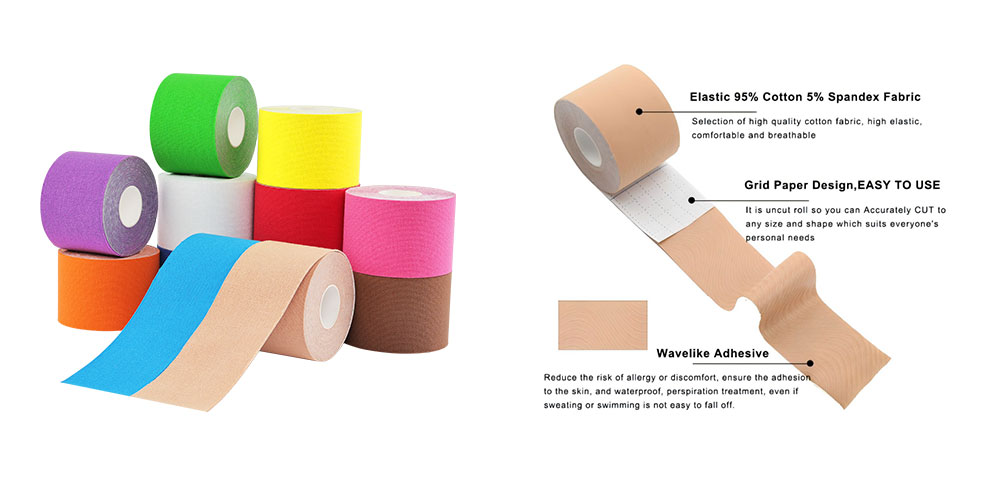
De belangrijkste kinesiology tape-materialen zijn een medische kleefmiddel en een flexibele stoffen achterkant. De stof is ontworpen om de elasticiteit van de huid na te bootsen, voor ondersteuning en een volledige bewegingsvrijheid.
De meest voorkomende stoffenmengsels zijn de volgende:
1. Katoen en spandex
Katoen is het meest voorkomende kinesiology tape-materiaal. Spandex, ook wel elastan genoemd, zorgt voor rek, terwijl katoen zachtheid en ademend vermogen biedt.
Hoewel sommige merken 3% of 4% spandex gebruiken, ligt het typische percentage rond de 5%. Een hoger spandexgehalte maakt het materiaal duurzamer en soepeler.
Comfortabel en ademend, ideaal voor dagelijks gebruik, gevoelige huid en algemene toepassingen.
2. Spandex en rayon
Rayon is ook een van de meest voorkomende kinesiology tape-materialen. Het is over het algemeen waterbestendiger en ademender dan katoen, met een gladde, zijdezachte textuur. Gemengd met spandex ontstaat een lichtgewicht, rekbaar weefsel.
Meestal rond de 5%, maar dit verschilt per merk.
Vanwege de snelle droging en het comfort is rayon ideaal voor activiteiten met water of transpiratie.
3. Spandex en nylon
Sterk en duurzaam, nylon is een populair materiaal voor kinesiotape. Het vormt een extreem elastische en duurzame tape wanneer het wordt gecombineerd met spandex.
Spandexgehalte: 5% of meer is gebruikelijk, hoewel het per merk verschilt. Een hoger spandexgehalte gaat gepaard met grotere rekkracht en duurzaamheid.
Sportevenementen met een hoog fysiek belastingsniveau en andere langdurige activiteiten die een hoog niveau van duurzaamheid vereisen.
Houd er rekening mee dat het spandexgehalte direct invloed heeft op de rekbaarheid en duurzaamheid van de tape. Lagere percentages (bijvoorbeeld 3-4%), die mogelijk minder ondersteunend zijn, zijn kosteneffectiever, terwijl een hoger percentage (bijvoorbeeld 5%) superieure elasticiteit en duurzaamheid biedt.
Wat maakt de kleefmiddel plakkerig?
Het kleefmiddel is een ander zeer belangrijk kinesiotape-materiaal, omdat het de levensduur en effectiviteit van de tape bepaalt. Kinesiotape blijft dagenlang op de huid plakken ondanks transpiratie en douches dankzij het kleefmiddel. Niet alle kleefmiddelen zijn gelijk. De belangrijkste soorten zijn de volgende:
1. Acrylkleefmiddelen
Japans acryl: Japans acryl wordt beschouwd als de beste kinesiotape-lijm. Het biedt uitstekende stabiliteit, sterke hechting en weerstand tegen hitte, koude en water. Hoewel het het duurst is, is het zeer betrouwbaar.
Duits Henkel: Niet ver daarachter. Het is betaalbaar en biedt goede hechting en stabiliteit. Het heeft ook een redelijk niveau van waterbestendigheid en is minder allergeen.
Chinees acryl:De meest economische keuze is chinees acryl. Hoewel het mogelijk minder goed presteert in extreme omstandigheden, biedt het goede waarde met respectabele waterbestendigheid en stabiliteit.
2. Hotmelt-kleefmiddel
Dit is de goedkoopste optie. Hoewel het aanvankelijk extreem plakkerig aanvoelt, is het niet waterbestendig en verliest het snel hechting bij blootstelling aan vocht of transpiratie.
Zwemmen, langdurig gebruik en intensieve sporten zijn de beste redenen om het te vermijden. Voor veeleisende toepassingen is het niet geschikt.
Hoe kiest u de beste kinesiotape-materialen?
Het kiezen van de beste kinesiotape-materialen kan uitdagend zijn vanwege de vele beschikbare opties. Hier is een korte gids gebaseerd op belangrijke kenmerken:
| Eigenschap | Voor fysiotherapie | Voor sport & hoge intensiteit | Voor herstel na blessures |
| Elasticiteit | Matig (5% spandex) | Hoog (5%+ spandex) | Matig tot hoog |
| Hechting | Japans of Duits acryl | Japans acryl | Duits of Japans acryl |
| Waterbestendigheid | Hoog (voor douchen) | Zeer hoog (voor zweet/water) | Hoog (voor langdurig dragen) |
| Stabiliteit | Hoog (consistente ondersteuning) | Zeer hoog (duurzaam) | Hoog (betrouwbaar) |
| Hypoallergeen | Belangrijk (gevoelige huid) | Minder kritisch | Belangrijk (bij gevoelige huid) |
| Duurzaamheid | 3-5 dagen | 3-7 dagen | 5-7 dagen |
Suggesties voor kinesiotape-materialen:
Voor fysiotherapie: gebruik mengsels van katoen of rayon met Duitse of Japanse acryllijm voor comfort en betrouwbaarheid.
Voor sport: gebruik nylon-spandexmengsels met Japanse acryllijm die zweet en veel beweging aankunnen.
Voor herstel na een blessure: kies kinesiotape-materialen die zowel comfort als ondersteuning bieden, zoals katoen-spandexmengsels met Duitse acryllijm.
Waar kinesiotape in de buurt kopen
Veel apotheken verkopen bekende merken zoals KT Tape, Veefun en Rocktape.
Sportartikelenwinkels: Bij winkels zoals Decathlon, Academy Sports of uw lokale sportwinkel vindt u gespecialiseerde sporttape.
Fysiotherapieklinieken verkopen soms direct cassettes aan patiënten.
Online winkels: Amazon biedt een breed assortiment kinesiotape-materialen, merken en varianten.
Merkwebsites: KT Tape, Rocktape, Veefun en SpiderTech verkopen rechtstreeks online.
Websites zoals Perform Better of MedEx, gericht op gezondheid, verkopen vaak professioneelwaardige cassettes.
Als bedrijf dat in bulk of onder eigen merk wil verkopen:
Stel een budget in en kieskinesiotape-materialen kwaliteitsniveau: Kies tussen premium tape en voordelige tape (koop bij een top Chinees fabriek, zoals WEMADE Tape En Aupcon).
Vind B2B-platforms zoals Alibaba.com: Zoek naar kinesiotape-leveranciers met “Trade Assurance” en controleer op bovengenoemde certificeringen (ISO, CE, Reach, UKCA, BSCI).
Communiceer duidelijk: Laat weten dat u 100% acrylkleefmiddel wilt en specificeer het merk (bijv. “Japanse acryl” of “Henkel”). Kies ook het type kinesiotape-materiaal (bijv. 95% katoen en 5% spandex).
Vraag monsters aan: Dit is verplicht. Test het monster op materiaal, rek, kleefkracht, comfort en wasbaarheid.
Bezoek beurzen: De beste kinesiotape-fabrikanten presenteren hun producten op medische en sportartikelenbeurzen in Azië, zoals CMEF in China en MEDICA in Duitsland.
Slotgedachten
Kinesiotape is meer dan kleurrijke stroken; het is een zorgvuldig gemaakt product dat uw lichaam ondersteunt zonder beweging te beperken. Door te weten welke kinesiotape-materialen en kleefmiddelen worden gebruikt, kunt u een geïnformeerde keuze maken die past bij uw behoeften, of het nu voor therapie, sport of revalidatie is.