Taping legs is also an essential step for running enthusiasts. Among the increasing number of runners every year, we often see that many runners suffer from various sports injuries for different reasons, one of which is pain in the front and back of the calf. Some people regard it as simple fatigue and soreness, but they do not know that it is a sports injury that is often overlooked by people: lesión en la tibia.
Con lesiones en la espinilla, dolor de rodilla, fascitis plantar, tenosinovitis, and muscle pain, a series of reactions will follow. The occurrence of this situation also means that future sports will be affected, which will bring a lot of inconvenience to life. However, there is now a way to prevent and alleviate this problem and that is the use of cinta de kinesiología para vendar las piernas. Pegarlo en las piernas de la forma correcta tendrá un buen efecto, por lo que cada vez más atletas y entusiastas del deporte elegirán el vendaje de piernas para proteger las piernas y reducir los daños que quedan después del ejercicio.

What is taping legs
Taping legs is commonly used by athletes during sports and physical activity to provide support and stability to their muscles and joints. Taping legs is the process of applying kinesiology tape legs to specific areas of the leg to prevent injury, provide additional support, or promote recovery.


Cómo aplicar la cinta kinesiológica to taping legs?
La primera está unida a la parte delantera del grupo muscular del muslo, soportando el cuadríceps.
Paso 1: Doble las rodillas y mida la longitud del parche, comenzando desde el borde inferior de la rótula hasta 2/3 del muslo.
Step 2: First, fix a length of patch on the protruding part of the lower edge of the patella, stretch the patch slightly (you can feel that the patch is stretched), and follow the muscles on the front of the thigh (slightly concave on the outside of the thigh) and paste from bottom to top.
Paso 3: Finalmente, deje un trozo de parche y fíjelo en el muslo, tanto en el lado izquierdo como en el derecho, y finalmente mostrará una forma de Y. Finalmente, no se necesita tensión para fijar los extremos inicial y final del parche. Después de pegar, frótelo de un lado a otro para facilitar la fusión del adhesivo y péguelo uniformemente sobre la piel.
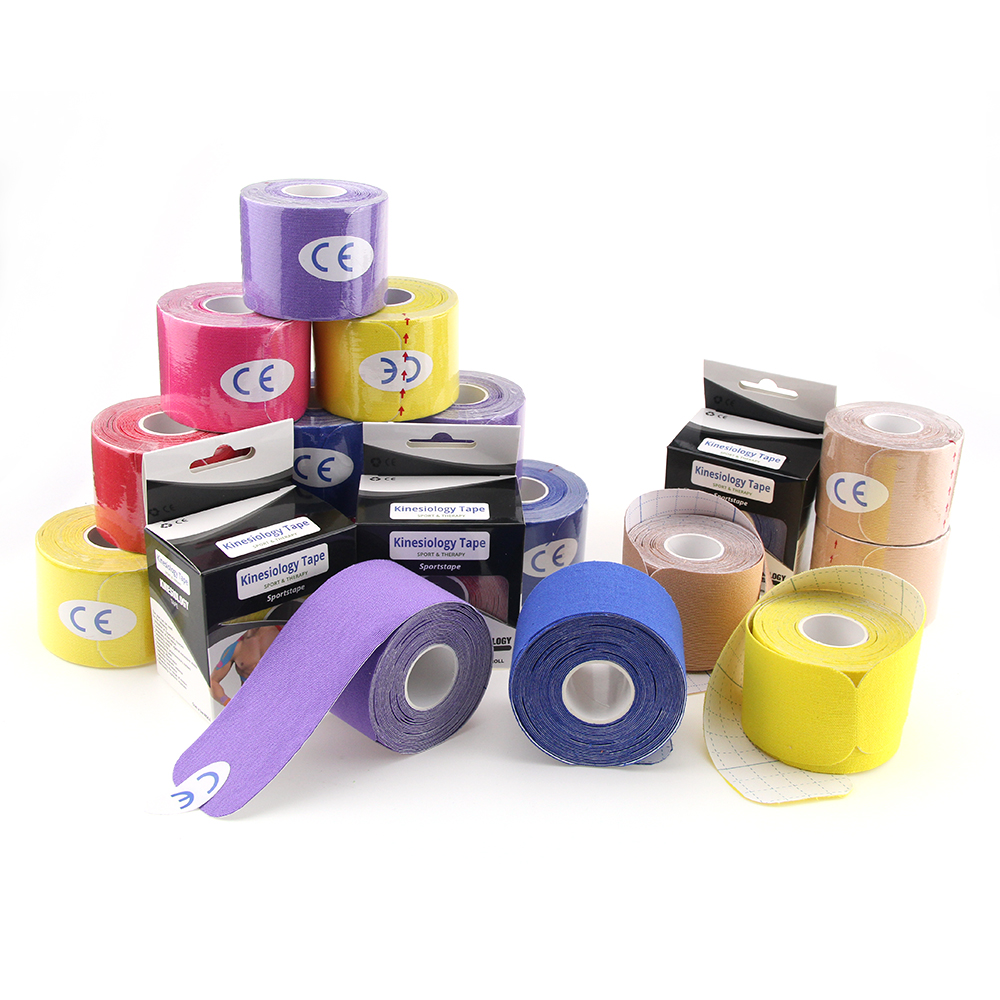
Does kinesiology tape for legs work?
Kinesiology tape for legs is a non-invasive treatment method. The light and breathable patch is pasted on the skin, which can stimulate the human body, thereby affecting and regulating physiological functions. Kinesiology tape for legs can act on six major physiological systems: skin (epidermis, dermis), nerves, fascia, muscles, joints and circulation, lymph, etc.
La piel es el órgano más grande del cuerpo humano. Es rica en diversos receptores sensoriales y capilares. La piel del cuerpo humano está llena de receptores sensoriales. Los nervios sensoriales transmiten las señales a la zona cerebral. Tras ser interpretadas por el cerebro, las señales son enviadas por los nervios motores. hacen que el cuerpo responda.
The weight and thickness of the Kinesiology tape for legs imitates the skin of the human body. The special adhesive composition and coating method allow the patch to adhere to the skin while maintaining breathability. The patch has elasticity and retractability.
When the patch is applied to the skin, the retraction of the patch will cause the skin to wrinkle. These folds can reduce the pressure on the sensory receptors in the skin, regulate pain, increase the subcutaneous space, and promote the microcirculation of subcutaneous microvessels and interstitial fluid. Therefore, the effect of using taping legs after kinesiology tape exercise is still considerable, and can effectively relieve muscle fatigue and pain.

como despegar cinta de kinesiología piernas?
Después de usar la cinta adhesiva para piernas, debe retirarse suavemente del borde a lo largo de la pierna, recuerde no quitarla con violencia para no dañar la superficie de la piel.
Antes de quitarlas, debe remojar las piernas de la cinta de kinesiología en agua durante unos minutos, o humedecer las piernas de la cinta de kinesiología con una toalla húmeda o loción, y luego quitarlas lentamente, de lo contrario, la piel superficial puede arrancarse y causar enrojecimiento o sarpullido. Si accidentalmente comete un error de este tipo y hace que la piel se caiga, no importa, porque es solo la piel de la superficie, no se necesita un tratamiento especial y se reparará automáticamente después de una noche de sueño.